Case Study:
Brand Voice Guide
Problem
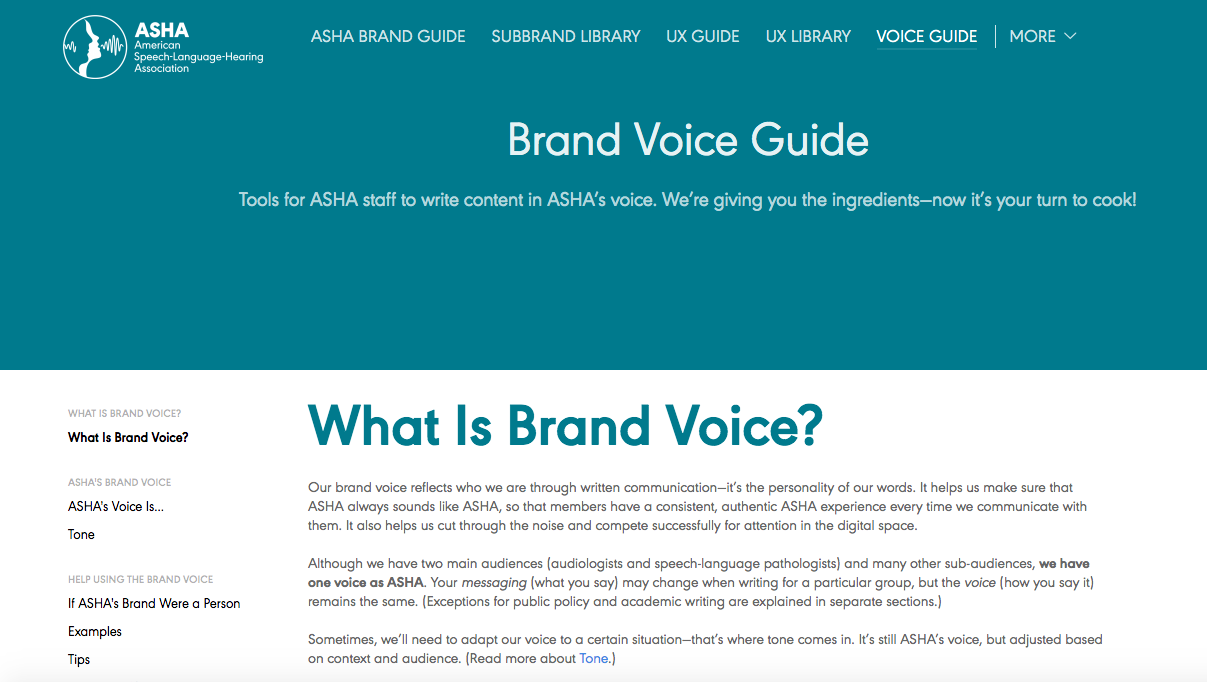
The American Speech-Language-Hearing Association (ASHA) had just gone through a visual rebrand, and the vendor had tacked on a single slide on “voice” at the end, with no plan for implementation. Our design director tapped me to build out a usable brand voice, given many people across the organization were responsible for writing copy (even though they weren’t “writers”). As you might guess, copy was often all over the place — from inappropriately academic to sugary sweet — making the user experience inconsistent at best.
Goals
Create a consistent experience for our members across all touchpoints. To do that, we’d develop a cohesive, easy-to-use brand voice guide — and then educate employees how to apply it to their writing.
Process
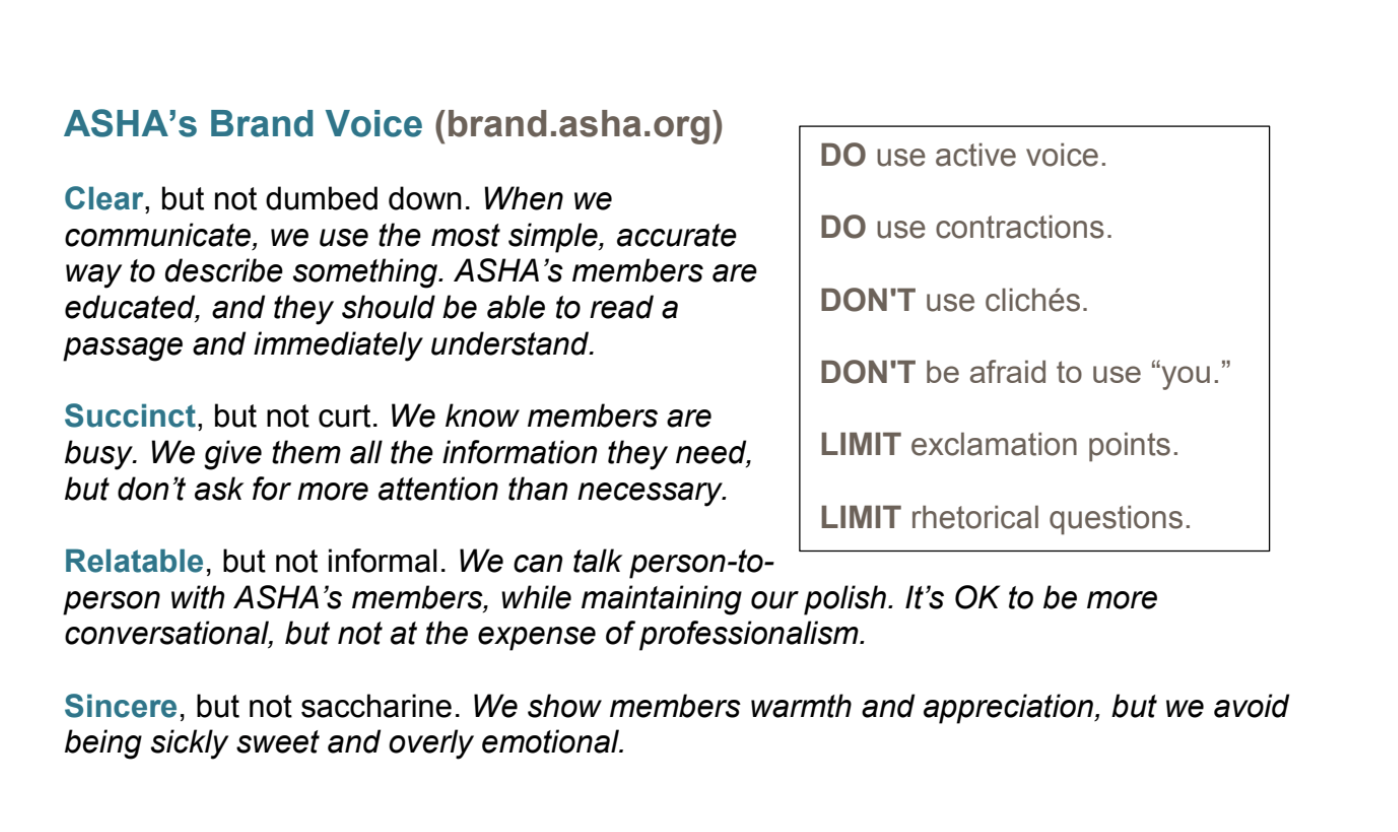
I researched and wrote multiple drafts of the guide before getting ultimate approval from stakeholders (including senior leadership) throughout the association, which took time and could be difficult. I pushed back in favor of best practices, but I also heard feedback and factored it into the guide. I also explained why “simple” and “clear” doesn’t equal dumbed down — a concern in an organization that serves a highly educated membership.
I learned some exceptions are actually OK — and often necessary. Natural language for our academic and government advocacy teams — what would make them look like they knew what they were doing to their peers — was much different than what would work best for users on our website. We adjusted our guide (and leaned heavily on tone) accordingly.
Outcome
At the end, I had a brand voice guide that provided concrete examples, tips, and how-tos. I educated our staff through workshops, info sessions, a “brand voice champions” group, and hands-on editing. Our writing became more consistent across all avenues — and more accessible.
Skills
Brand voice, workshops, cross-departmental collaboration, plain language, editing

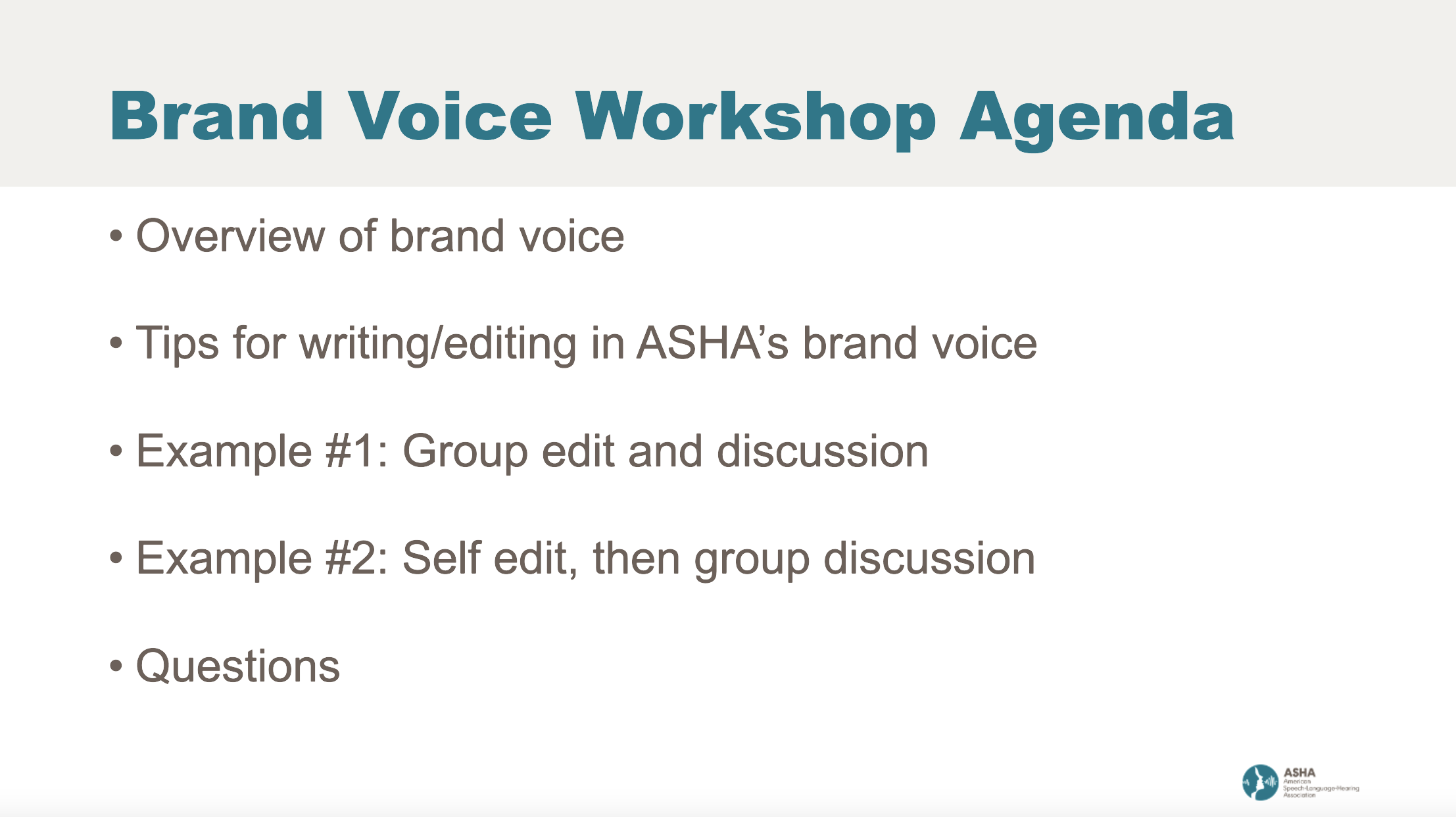
Agenda for one of our brand voice workshops for ASHA staff

Printed cards I handed out to workshop participants

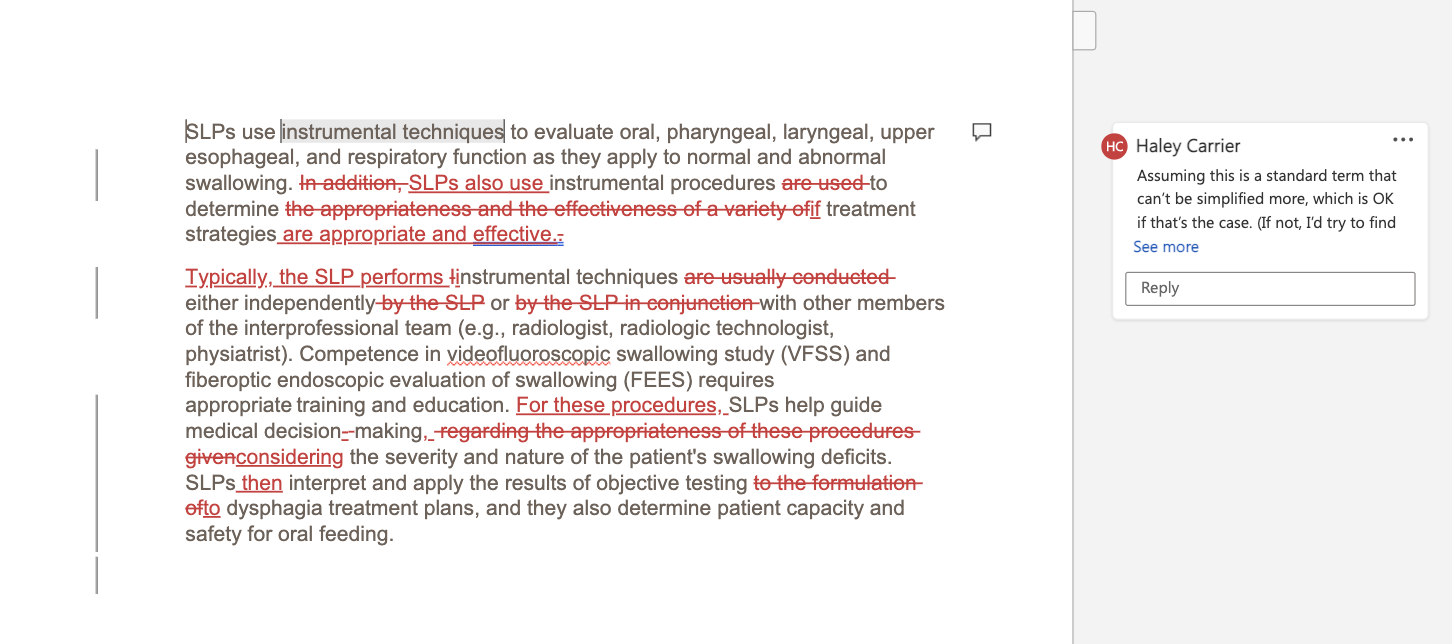
An example of helping ASHA staff understand how to apply the brand voice with hands-on editing